
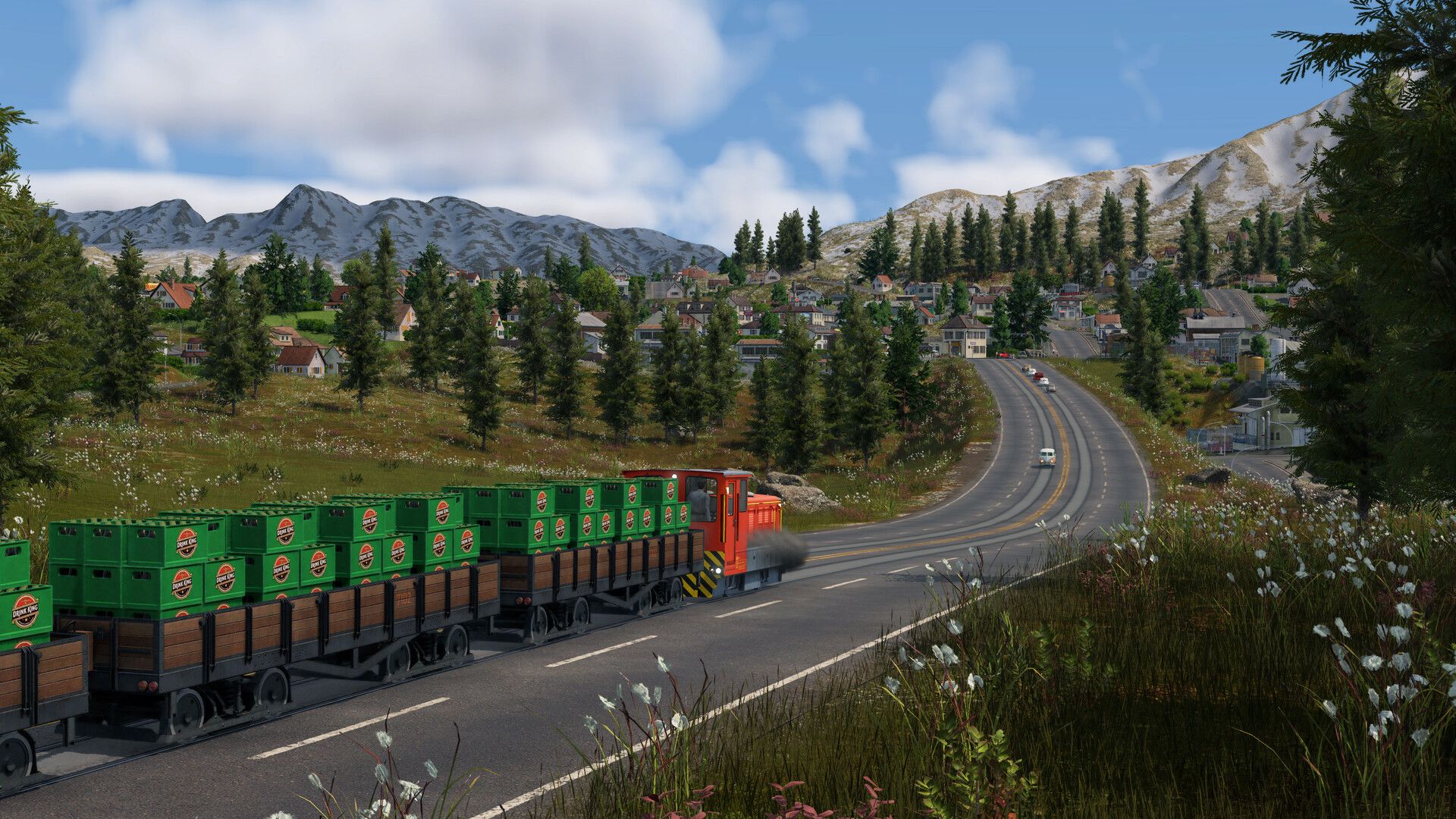
 © 2026 Urban Games / Paradox Interactive
Transport Fever 3 Wiki: Vehicles, Industries & Mechanics
A fan-made Transport Fever 3 wiki: verified facts on vehicles, cargo, maps, storage and versions, with every reference guide on this site in one hub.
Welcome to the Transport Fever 3 wiki hub — the reference layer of this site. Transport Fever 3 is a big simulation: three hundred-plus vehicles, 36 cargo items, start years from 1900 to 2020, four climate generators and an economy that punishes guessing. No single page can hold all of it, so this hub does something different: it collects the facts every player looks up — release data, content counts, the current game version, how the systems fit together — and routes you to the deep-dive page for each topic. Every version-sensitive number below was checked against an official source on October 10, 2026, and the same policy holds for every page it links to.
One honest disclosure up front: Urban Games runs an official wiki, and it is the primary source this site verifies against. The official wiki documents the game's data — vehicle manuals, release notes, support answers — but it is a reference in the literal sense: dense, category-by-category, and (as of October 10, 2026) publishing full stats tables only where they are complete, such as the bus fleet. The pages on this site sit on top of that data and organize it around player questions: why freight stops moving, which track to build, what a seed does. Use both together: the official manual gives you a vehicle's numbers, and the pages below explain the system around it — why an electric train crawls on simple tracks, or why freight piles up in a warehouse with nowhere to go.
Transport Fever 3 at a glance
| Fact | Status (checked October 10, 2026) |
|---|---|
| Developer / Publisher | Urban Games / Paradox Interactive |
| Released | September 29, 2026 — PC, Mac, Linux, PlayStation 5, Xbox Series X|S |
| Game modes | 8-mission Campaign, Tycoon Mode, Sandbox Mode, Map Editor |
| Vehicle count | 300+ vehicles (official feature overview) |
| Cargo items | 36, each with manufacturers and consumers (full catalogue) |
| Start year | Any decade from 1900 to 2020, in ten-year intervals (free-game manual) |
| Current version | Steam stable build 40420, dated October 8, 2026 (patch notes) |
| Multiplayer | None — single-player only, per the official support FAQ (details) |
| Price | $49.99 USD (Steam US, verified from the Steam API) — all regions & editions |
Two entries in that table deserve a note. The vehicle count comes from the official launch feature overview, which says "more than 300" — the exact in-game number moves with patches and any future vehicle DLC, so this site quotes the official figure rather than a hand count. And the multiplayer row is the single most-searched fact of the launch window: the official FAQ states plainly that the game is built as a single-player experience, with no online or co-op mode on any platform.
Vehicles: trains, buses and the rest of the fleet
The fleet is the heart of the game, and the official vehicle manual splits it by category — locomotives, wagons, buses, trucks, ships and aircraft — with stats published progressively. This site's transport pages cover the systems around those vehicles rather than repeating roster tables:
- Trains & rail — how rail actually works: the three track generations and their speed ceilings (100 km/h simple tracks, 160 km/h standard, 350 km/h high-speed), electrification as a retrofit decision, station modules, path signals, and the deadlock patterns that stop a line dead.
- Bus catalogue — the one fleet category with a complete verified stats table (all 25 buses): availability years, power, top speed, weight, capacity and load speed.
- Cargo types & industries — all 36 cargo items with their manufacturer and consumer columns, the specialization classes, and how delivery ratings behave once freight reaches storage.
Cargo chains, storage and the fixes that unblock them
Transport Fever 3 reworked storage: warehouses and their catchment areas replaced the station side-tracking older games in the series relied on. That change is an improvement and a new failure mode at once, which is why the launch month's biggest support topics are both storage-related:
- Warehouse guide — catchment areas, storage sections and extensions: the layer that decides whether freight flows.
- Cargo not unloading — the launch month's most-reported problem, diagnosed step by step.
- Warehouse cargo stuck — freight piling up with nowhere to go, and the five checks that clear it.
Maps, seeds and the editor
Every map you will ever play starts as a generated world, and the generation is deterministic: the same seed combined with the same settings always produces the same map. That rule — confirmed against official material — is what makes shared seeds useful, and the map seeds page maintains a list of seeds players shared in October 2026 with climate notes for each. If the generated worlds feel limiting, the map editor covers the official toolset: heightmap import, town and industry generators, and publishing your finished map to the Mod Hub.
Versions, requirements and buying decisions
The remaining reference pages answer the questions that come up before and between sessions:
- System requirements — official PC, Mac and Linux specifications, including the mandatory 90 GB SSD install and the AVX2 CPU requirement that blocks older processors.
- Price & editions — what the Standard and Deluxe editions contain, with regional prices pinned to official store data and a capture date.
- Multiplayer status — the official position, quoted in full, plus what the game offers instead.
- Patch notes — every game update tracked with platform and build number, starting from launch and the first stability update (40420).
How this wiki is sourced
Every page on this site follows one policy, and this hub states it explicitly so you can judge the material accordingly:
- Official sources first. Game mechanics are verified against the official wiki, the support FAQ, the release notes and the in-game manual — never described from memory or second-hand summaries.
- Checked dates on every version-sensitive fact. Prices, build numbers, rosters and official statements all carry the date they were last verified, because a transport sim this new changes weekly.
- Community reports labeled as such. Where a fact circulates in the community but has no official confirmation, pages say exactly that instead of quietly upgrading it.
- No speculation about future content. Unannounced vehicles, modes or dates do not appear on these pages — see the multiplayer page for how that policy reads in practice.
FAQ
Is there an official Transport Fever 3 wiki?
Yes — Urban Games runs one at wiki.transportfever3.com. It hosts the vehicle manual, the platform release notes and support material, and it is the primary source this site checks its facts against. This hub complements it: the official wiki documents the game's data, while these pages organize that data around player problems and keep the checked dates attached.
How many vehicles are in Transport Fever 3?
The official launch feature overview says more than 300 vehicles, checked October 10, 2026. The official wiki publishes per-vehicle stats category by category — the bus fleet table is complete (25 buses), and further categories appear there as they are documented.
How many cargo types does the game have?
36 cargo items as of the checked date, each with defined manufacturers and consumers. The full table — including specialization classes and storage behavior — is on the cargo types page.
What is the current Transport Fever 3 version?
Steam stable build 40420, dated October 8, 2026 — the game's first stability update, targeting frame times, video memory and several crash fixes. Storefront and console builds can lag or lead that number, so the patch notes page labels the platform with every build it reports.
Is this wiki affiliated with Urban Games or Paradox Interactive?
No. This is an independent fan-made reference. Transport Fever 3 and all related trademarks belong to their respective owners, and nothing here is endorsed by either company — which is also why every official claim on the site links back to an official source you can check yourself.
Related guides
If you are new, tips and tricks is the fastest way into the systems this hub indexes, and the mods guide explains the mod.io browser that replaces Steam Workshop on every platform. The map seeds page is the most-updated reference on the site — new community seeds land there as they are verified.
Version and evidence notes
- Release date, platforms, modes and the 300+ vehicle figure: official launch feature overview, checked October 10, 2026.
- Current build: Steam stable 40420 per the official PC release notes (wiki.transportfever3.com), dated October 8, 2026.
- Cargo count and bus fleet table: verified against the official wiki and in-game data on October 10, 2026.
- Multiplayer statement: official support FAQ, quoted verbatim on the multiplayer page, checked October 10, 2026.
- Prices: Steam appdetails API capture, October 10, 2026 — rechecked on the price page before any purchase-decision update.